


Blog
How Singing Bowls Are Made: 7 Powerful Steps of Himalayan Craft

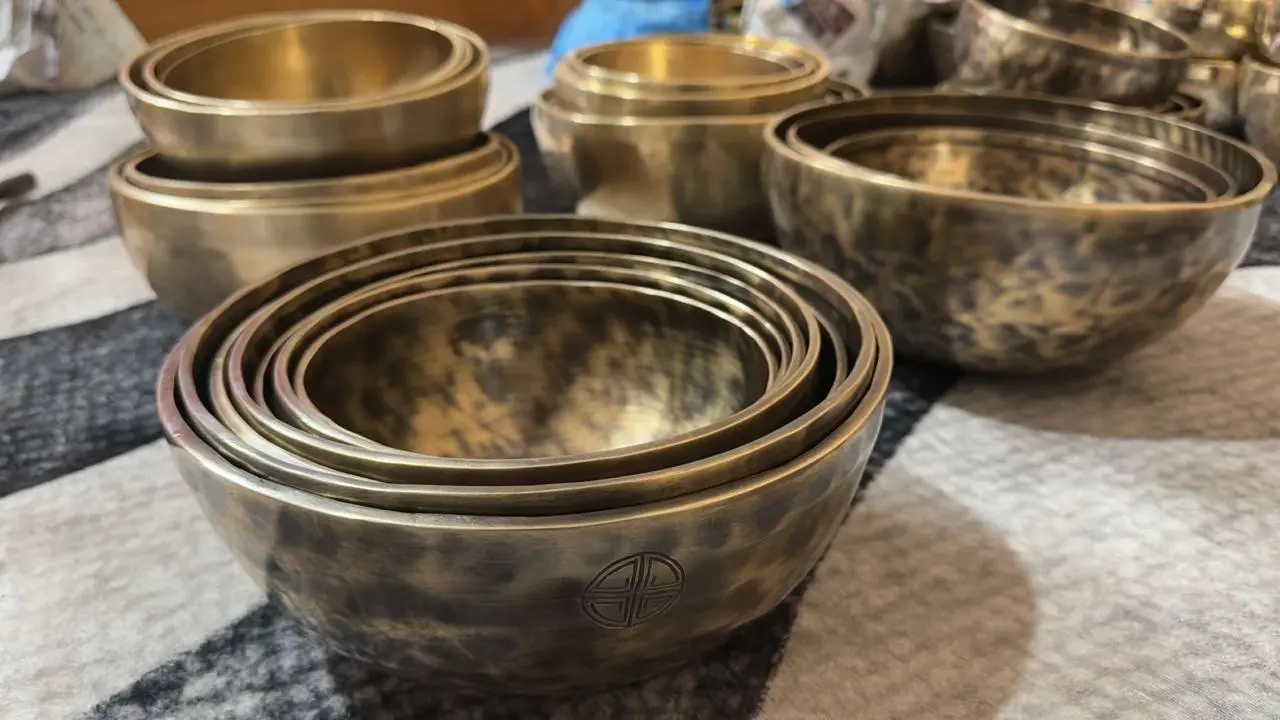
How Singing Bowls Are Made – Traditional Himalayan Craft
Singing bowls are beautiful handmade instruments known for their calming sound and powerful vibrations. They are widely used for meditation, yoga, and sound healing practices around the world. Many people wonder how singing bowls are made and what traditional techniques artisans use to create their unique sound.
Understanding how singing bowls are made helps us appreciate the craftsmanship and cultural heritage behind these instruments. Handmade singing bowls from the Himalayan region are created using ancient metalworking techniques that involve melting metals, shaping them by hammering, and carefully tuning the bowl to produce harmonic tones.
At Handcrafts Gallery, we celebrate traditional Himalayan craftsmanship and support artisans who continue to produce authentic handmade singing bowls using these traditional methods. If you would like to explore our collection, you can view our singing bowls here.
History of Singing Bowls
Singing bowls are believed to originate from the Himalayan region, especially Nepal and northern India. Historical references suggest these bowls may date back centuries and have been used in meditation, rituals, and healing practices.
You can learn more about the background of singing bowls from this historical overview on Wikipedia.
https://en.wikipedia.org/wiki/Singing_bowl
In the past, these bowls were simply called metal bowls or “bati,” but they later became known as singing bowls because they produce a resonant tone when struck or rubbed with a mallet.
Today, singing bowls are used worldwide for meditation, relaxation, and spiritual practices.
Materials Used in Singing Bowls
Traditional singing bowls are made from special metal alloys that produce strong vibrations and long-lasting sound.
Most handmade singing bowls are made from bell metal, which is mainly a mixture of copper and tin.
Some traditional bowls were believed to contain seven metals, representing celestial bodies.
These metals may include:
- Copper
- Tin
- Iron
- Gold
- Silver
- Lead
- Mercury
This combination of metals contributes to the bowl’s resonance and spiritual symbolism.
Modern singing bowls are often made from bronze alloys, which produce deep and warm tones.
Step-by-Step Process of How Singing Bowls Are Made
Creating a handmade singing bowl requires skill, patience, and teamwork. Artisans follow several important steps.
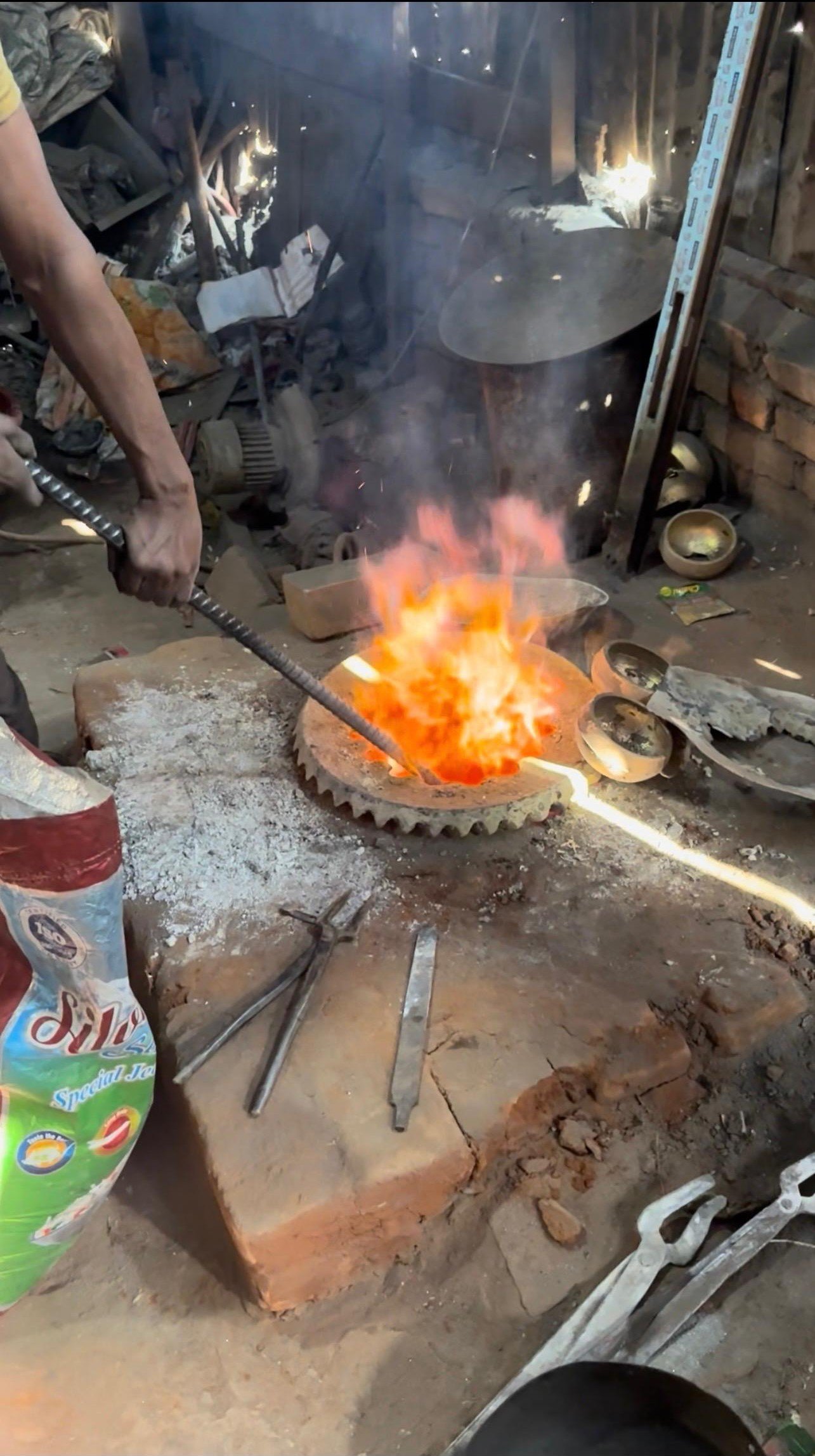
1. Melting the Metal
The process begins by heating different metals in a furnace until they melt into liquid form. The molten metal is then poured into molds to create thick metal pieces that will later be shaped into bowls.
2. Forming the Metal Disc
After the metal cools, it forms a solid round piece or disc. This disc becomes the base material used to shape the singing bowl.
The thickness of the metal disc plays an important role in determining the bowl’s sound and durability.
3. Heating and Hand Hammering
Hand hammering is the most important step in making singing bowls.
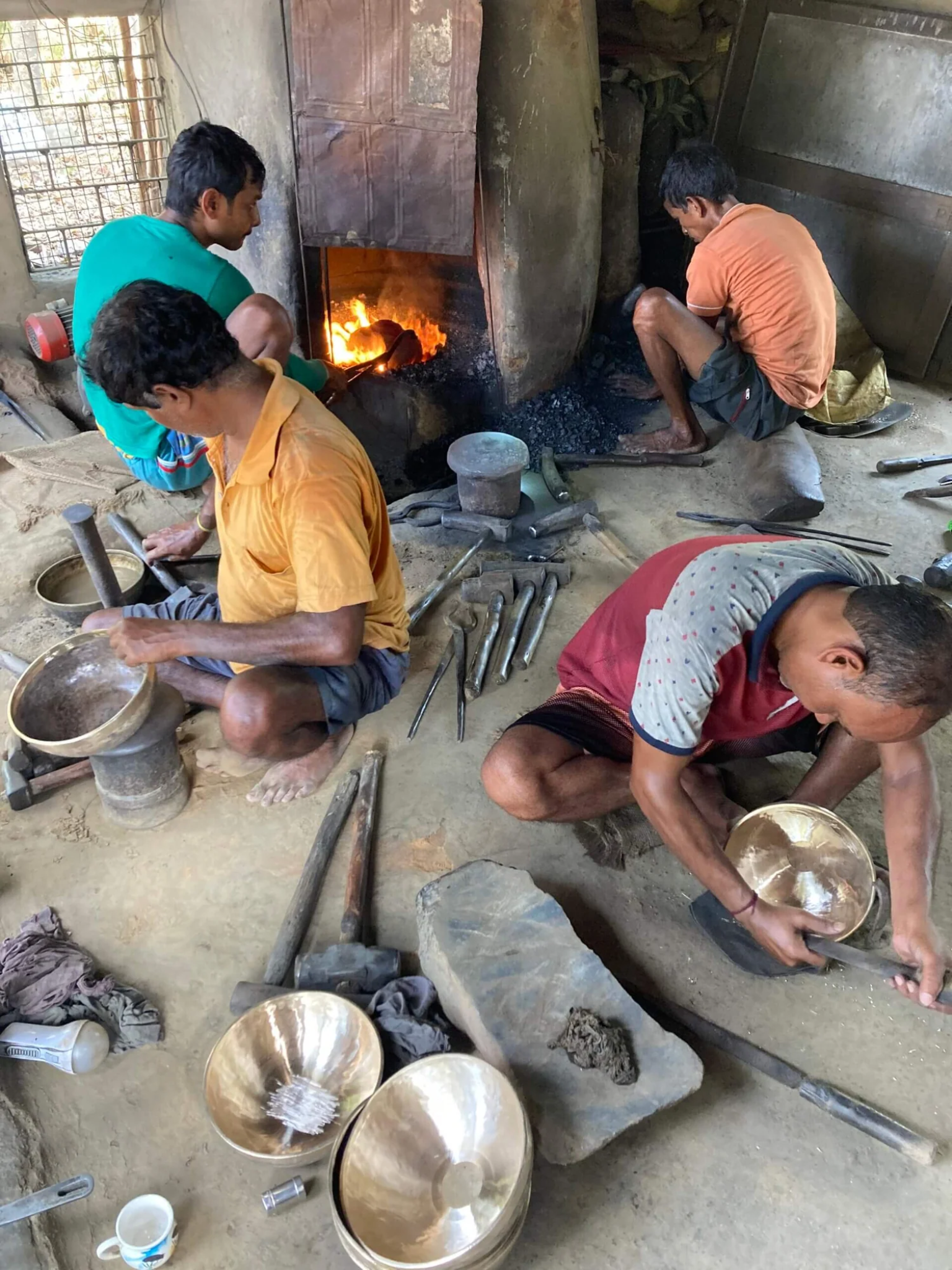
Several artisans work together to heat the metal disc until it becomes red hot. They then hammer the metal repeatedly to slowly shape it into a bowl.
This heating and hammering process may be repeated many times. Each hammer strike gradually forms the bowl and influences its final sound.
Because of this process, handmade bowls usually have visible hammer marks on their surface.
4. Shaping the Bowl
Once the bowl shape begins to appear, artisans refine the edges and adjust the thickness of the metal.
The shape and thickness of the bowl determine:
- Sound vibration
- Pitch
- Resonance
Each handmade bowl produces a slightly different tone.
5. Tuning the Bowl
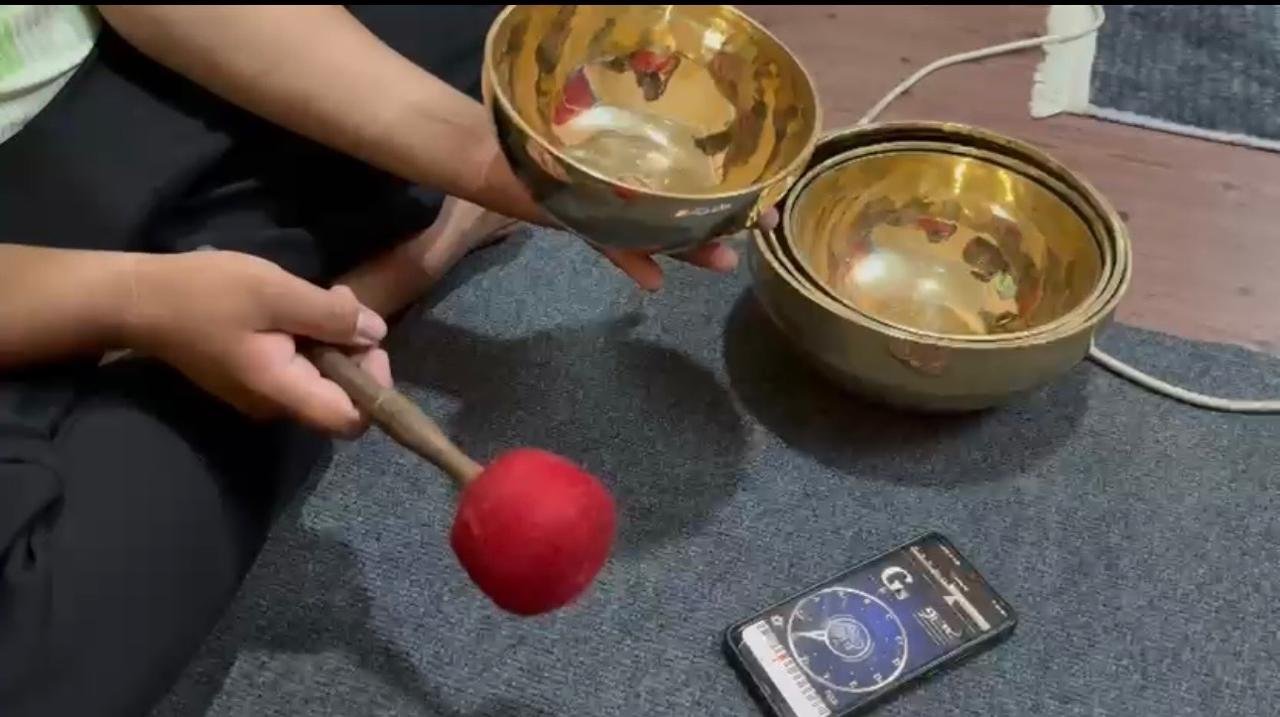
After shaping the bowl, artisans test its sound by striking it or rubbing its rim with a wooden mallet.
If the tone is not correct, the bowl may be hammered again to adjust the vibration and pitch.
This process ensures that the bowl produces a deep and harmonious sound.
6. Polishing and Decoration
The final stage is polishing and decorating the bowl.
Some singing bowls are engraved with:
- Buddhist symbols
- Sacred mantras
- Decorative patterns
- Spiritual artwork
These designs add artistic and cultural value to the bowl.
Handmade vs Machine-Made Singing Bowls
Today, singing bowls are produced in two main ways.
Handmade Singing Bowls
- Created using traditional hammering techniques
- Unique sound and vibration
- Visible hammer marks
- Highly valued for meditation and sound healing
Machine-Made Singing Bowls
- Produced using molds and casting techniques
- Smooth and uniform design
- More consistent sound
Hand-hammered bowls are usually preferred because each bowl has its own unique tone and character.
Benefits of Singing Bowls
Singing bowls are widely used for wellness and spiritual practices.
Common benefits include:
- Promotes relaxation and stress relief
- Supports meditation and mindfulness
- Enhances yoga practices
- Creates calming sound vibrations
- Helps improve focus and mental clarity
Many people use singing bowls as part of sound therapy and meditation sessions.
About Handcrafts Gallery
At Handcrafts Gallery, we work closely with Himalayan artisans who have been crafting singing bowls using traditional techniques for generations.
Our goal is to preserve these ancient crafts while sharing authentic handmade singing bowls with customers around the world.
Conclusion
Understanding how singing bowls are made reveals the incredible craftsmanship behind these ancient instruments. From melting metal to hand hammering and tuning, every step requires patience, skill, and dedication.
Handmade singing bowls are not just musical instruments — they are cultural treasures that carry centuries of tradition and artistry.
By supporting handmade singing bowls, we also support the artisans who continue to preserve this beautiful Himalayan craft.
FAQ – How Singing Bowls Are Made
What metals are used to make singing bowls?
Traditional singing bowls are made from metal alloys such as copper and tin. Some bowls are believed to contain seven metals including gold, silver, iron, and lead.
Are singing bowls handmade?
Yes. Many traditional singing bowls are handmade by skilled artisans who hammer heated metal into a bowl shape using traditional tools.
How long does it take to make a singing bowl?
The process can take several hours or even days depending on the size of the bowl and the level of craftsmanship required.
Why do handmade singing bowls sound different?
Handmade bowls are shaped and tuned individually, which means each bowl produces a slightly different vibration and tone.
Where are singing bowls made?
Many traditional singing bowls are made in Nepal, particularly in areas such as Kathmandu and Patan where metalworking traditions have been passed down through generations.