


Blog
Pashmina vs Cashmere : What’s the Difference?

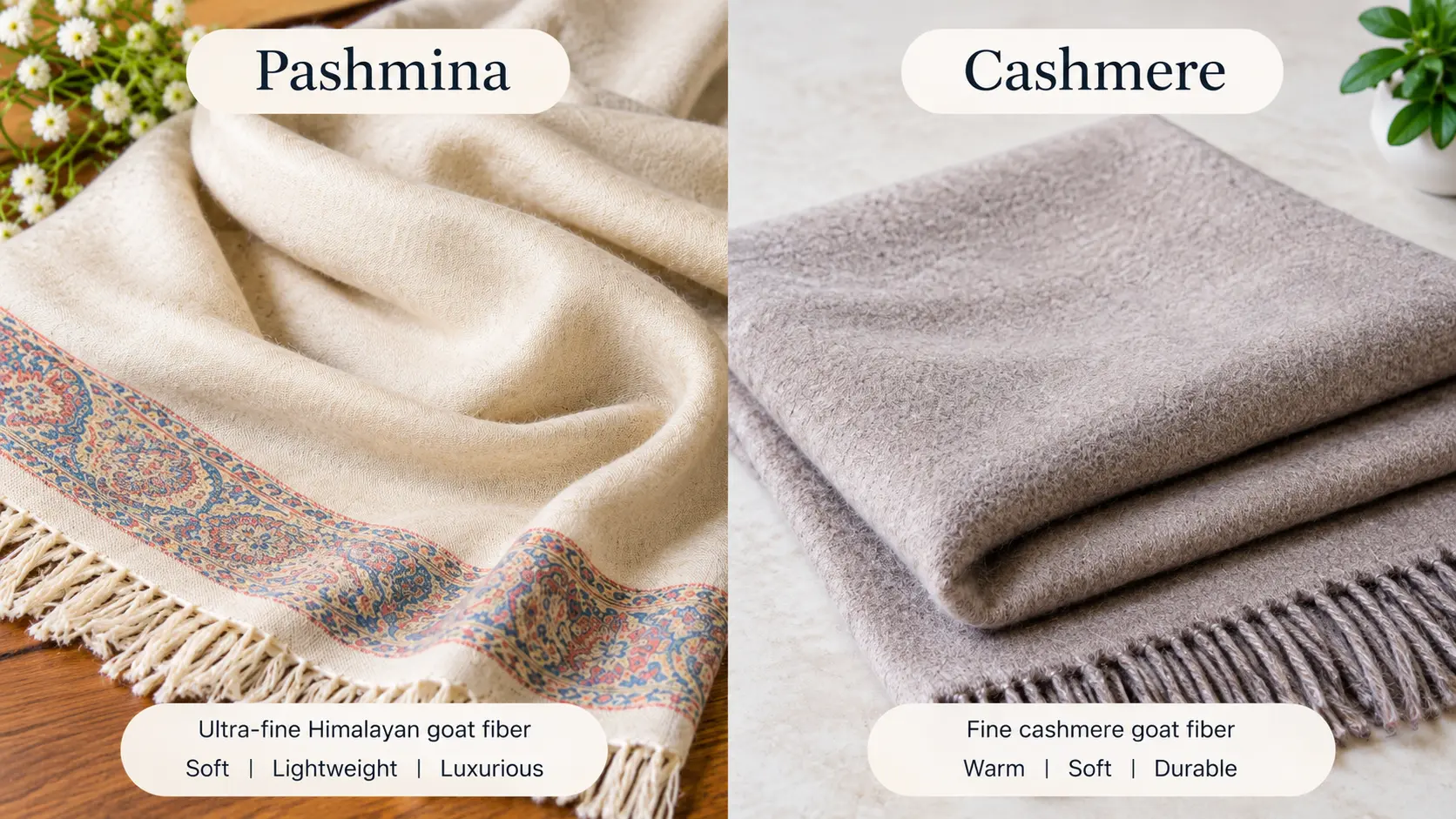
When shopping for a soft, warm, and elegant shawl, you have probably come across the terms pashmina and cashmere. Both are associated with fine natural fibers, comfortable clothing, and luxurious accessories. However, are they the same, or is there a real difference between them?
Understanding pashmina vs. cashmere can help you choose the right shawl, scarf, or wrap for your needs. The key differences relate to how the terms are used, the type and fineness of the fiber, the weaving process, and the finished product.
In this guide, we explain what pashmina and cashmere mean, compare their main characteristics, and share practical tips for choosing and caring for these beautiful textiles.
What is Pashmina?
Pashmina traditionally refers to exceptionally fine animal fiber associated with the Changthangi or Pashmina goat, which lives in the high-altitude regions of the Himalayas, particularly Ladakh. The fine undercoat is collected during the natural seasonal shedding process and carefully processed into yarn.
Pashmina is also widely used to describe fine shawls and wraps made from this fiber. These textiles are valued for their lightweight feel, softness, warmth, and elegant drape.
Depending on the product and its origin, pashmina shawls may be hand-spun, handwoven, or produced using other textile techniques. The exact fiber content and manufacturing process can vary, so it is important to check the product description before buying.
What is Cashmere?
Cashmere is a fine natural animal fiber obtained from the soft undercoat of cashmere-producing goats. These goats are raised in several regions, including Mongolia, China, and parts of Central and South Asia.
Cashmere is widely used to make sweaters, scarves, shawls, cardigans, coats, blankets, and other soft textiles. It is valued for its warmth, lightweight feel, and comfort.
Cashmere products vary considerably in fiber fineness, yarn quality, construction, and price. A well-made cashmere garment can be exceptionally soft and durable when properly cared for.
Pashmina vs Cashmere : Key Differences
Although the terms are sometimes used interchangeably, they do not always describe exactly the same thing.
| Feature | Pashmina | Cashmere |
| Meaning | Traditionally associated with exceptionally fine Himalayan goat fiber and fine shawls | A recognized category of fine animal fiber and textiles made from it |
| Fiber source | Traditionally associated with the Changthangi goat | Fine undercoat from cashmere-producing goats |
| Texture | Often very fine, soft, and lightweight | Ranges from exceptionally soft to slightly more substantial |
| Warmth | Warm despite its lightweight feel | Excellent warmth relative to its weight |
| Common products | Fine shawls, wraps, and scarves | Sweaters, scarves, shawls, coats, and accessories |
| Production | May involve traditional hand-spinning and handweaving | May be handwoven, machine-knitted, or machine-woven |
| Price | Depends on fiber, origin, craftsmanship, and authenticity | Depends on fiber quality, construction, brand, and origin |
Important: These characteristics are general descriptions, not absolute rules. High-quality cashmere can be just as soft and lightweight as pashmina. The actual fiber content and construction matter more than the product name alone.
Is Pashmina the Same as Cashmere?
The answer depends on how the terms are being used.
Pashmina is traditionally associated with particularly fine Himalayan goat fiber and the shawls made from it. Cashmere is the broader, commonly recognized term for fine undercoat fiber obtained from cashmere goats.
Because the terminology overlaps, some products marketed as pashmina are made from cashmere, while others may contain blends or different fibers. Not every item labelled “pashmina” is necessarily made from pure pashmina fiber.
When purchasing a shawl, read the fiber-composition label and ask the seller about the material, origin, and production process. This is especially important when buying for resale or wholesale.
Which Is Softer: Pashmina or Cashmere?
Neither term automatically guarantees greater softness.
Softness depends on several factors, including fiber diameter, fiber length, yarn preparation, spinning, weaving or knitting, and finishing. Finer fibers often feel softer against the skin, but the final result also depends on how the textile is made.
A fine pashmina shawl may feel exceptionally delicate and lightweight. A high-quality cashmere scarf can offer a similarly soft and luxurious feel.
If softness is your main priority, ask about the actual fiber composition and feel the fabric if possible. Look for a smooth texture without excessive scratchiness.
Which Is Warmer: Pashmina or Cashmere?
Both can provide excellent warmth without the heaviness of many other fabrics.
The warmth of a shawl depends on its fiber properties, thickness, density, weave, and how closely it wraps around the body. A lightweight pashmina wrap can provide comfortable warmth, while a thicker cashmere scarf may offer more insulation.
Rather than choosing based on the name alone, consider the climate and how you intend to wear the product. A fine, lightweight shawl is suitable for layering, travel, and cool evenings, while a thicker scarf may be preferable in colder conditions.
How to Identify a Quality Pashmina or Cashmere Shawl
If you are comparing pashmina vs. cashmere, consider these practical quality checks:
1. Check the fiber composition
Look for a clear label specifying the fiber content. If a product is advertised as 100% pashmina or cashmere, ask for supporting details when necessary, particularly for expensive purchases.
2. Examine the texture
Quality fiber should feel comfortable against the skin. However, softness alone cannot prove that a textile is genuine, because other fine fibers and blends can also feel soft.
3. Look at the weaving and finishing
Check the edges, seams, weave consistency, and overall finish. Neatly finished edges and consistent construction can indicate careful manufacturing.
4. Consider the weight and drape
Fine shawls often have a graceful drape and feel light for their size. Still, weight alone does not establish fiber quality or authenticity.
5. Ask about the source
A reputable seller should be able to explain the fiber content, manufacturing method, and product origin. For wholesale orders, request written specifications and samples before making a large purchase.
Avoid relying on burn tests or other home experiments as definitive proof of fiber identity. Professional fiber testing is more reliable when confirmation is important.
How to Care for Pashmina and Cashmere
Both pashmina and cashmere require gentle care to help preserve their softness and shape.
- Read the care label: Follow the manufacturer’s instructions, since different yarns, dyes, and finishes require different treatments.
- Wash gently: Handwashing may be appropriate for some products, using cool water and a suitable wool detergent. Others may require professional cleaning.
- Avoid rubbing and twisting: Rough handling can stretch the fabric, cause felting, or damage the fibers.
- Dry carefully: Remove excess water gently and dry flat when the care instructions permit. Avoid wringing the textile.
- Store properly: Keep shawls clean and dry, and protect them from moths and prolonged moisture.
- Avoid unnecessary heat: High temperatures and aggressive tumble drying can damage delicate animal fibers.
With appropriate care, a well-made pashmina or cashmere shawl can remain comfortable and beautiful for many years.
Which Should You Choose: Pashmina or Cashmere?
The best choice depends on your preferences and how you plan to use the textile.
Choose a fine pashmina shawl if you are looking for a lightweight wrap with an elegant drape and you have verified its fiber composition and quality.
Choose a cashmere product if you want a wider range of options, including sweaters, scarves, shawls, and winter accessories in different weights and styles.
For retailers and wholesale buyers, compare the material specifications, consistency between batches, finishing quality, supplier reliability, and price before placing an order.
Ultimately, the best product is not determined by the label alone. Fiber quality, craftsmanship, transparency, and proper care all contribute to the experience.
Frequently Asked Questions
Is pashmina more expensive than cashmere?
Not always. Price depends on fiber quality, fineness, origin, craftsmanship, construction, and brand. A finely made pashmina shawl can command a premium, but high-quality cashmere products can also be expensive.
Is 100% pashmina better than cashmere?
Neither is automatically better. The terms can overlap, and the quality of the actual fiber and finished textile matters more than the name on the label.
Can cashmere be used to make shawls?
Yes. Cashmere is commonly used to make shawls, scarves, wraps, sweaters, and other clothing and accessories.
How can I tell whether a pashmina shawl is genuine?
Start with the fiber-composition label and the seller’s information about origin and manufacturing. Texture and appearance can help you assess workmanship, but they cannot conclusively establish fiber identity. For high-value purchases, consider professional fiber testing.
Is pashmina suitable for everyday use?
Yes, a well-made pashmina shawl can be worn for everyday layering, travel, work, and special occasions. Follow the care instructions to protect the delicate fibers.
Can I buy pashmina shawls wholesale from Nepal?
Nepal has suppliers and manufacturers offering pashmina and other fine shawls for retail and wholesale markets. Before placing an order, confirm the fiber composition, available designs, minimum order quantity, production capacity, and shipping terms.
Explore Pashmina from Nepal
A thoughtfully chosen pashmina shawl combines comfort, warmth, and versatile styling. Whether you are selecting a personal accessory or sourcing textiles for your business, understanding the material helps you make a more informed decision.
Explore the pashmina collection at Handcrafts Gallery to discover available styles and find a shawl suited to your needs.